JEE 2026 · Amines
JEEChemistryAmines2026
A read-only public preview of this previous-year question set.
5 of 28 questions
You're seeing 5 of 28 questions. Answers and worked solutions are in the free app, with every question in this set.
Question 1
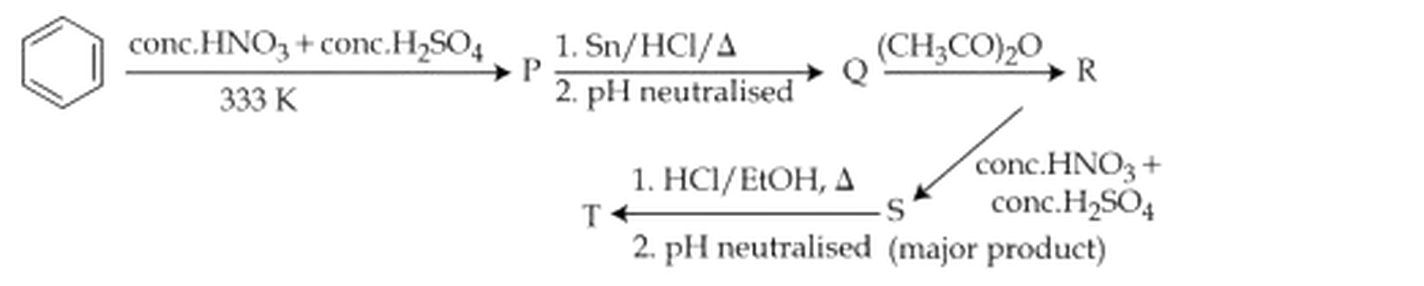
NumericalFind the percentage by mass of nitrogen in product T in the reaction scheme, to the nearest integer. Use atomic masses H = 1, C = 12, N = 14 and O = 16.Question 2
Single-correct MCQCompound P is treated with hot aqueous ammonia to give Q. Heating Q with and forms R with molecular formula . Identify P, Q and R.Question 3
Single-correct MCQA hydrocarbon P () reacts with to give an optically active compound Q (). Q reacts with one mole of ammonia to give R (). Diazotisation and hydrolysis of R gives S. Identify P, Q, R and S.Question 4
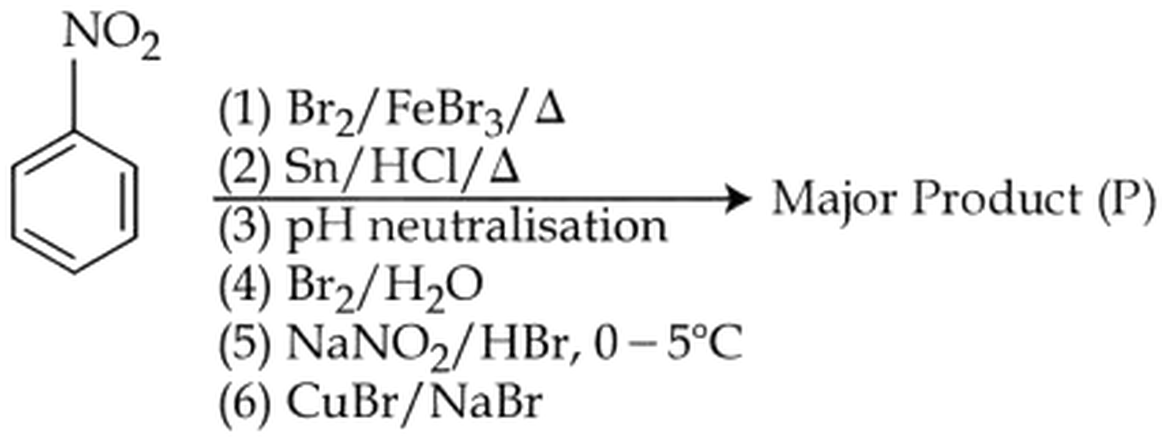
Single-correct MCQConsider the above sequence of reactions. The number of bromine atom(s) in the final product (P) will be:Question 5
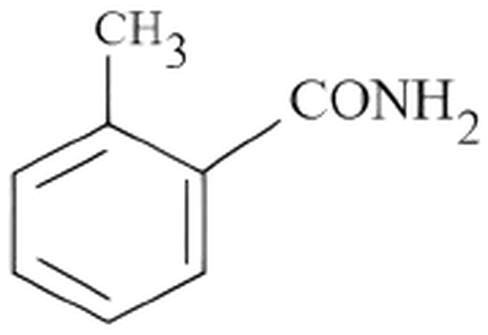
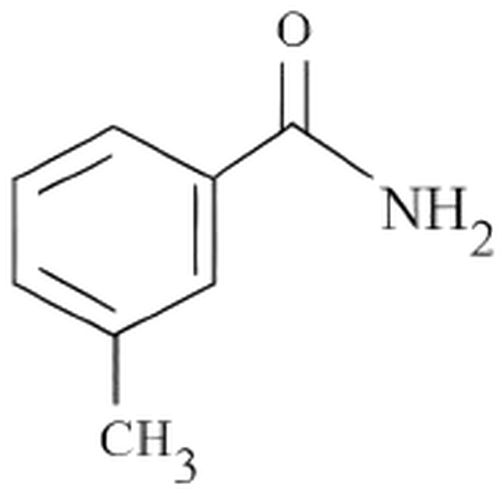
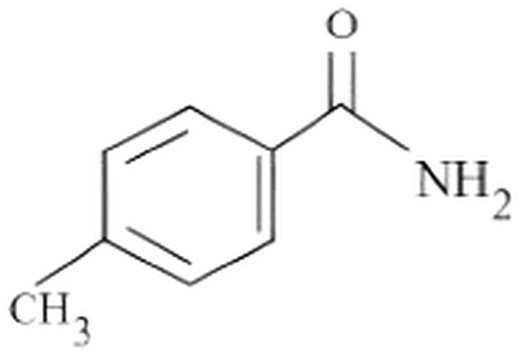
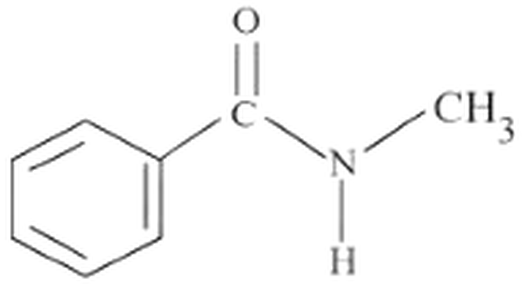
Single-correct MCQNeutral organic compound A () reacts with aqueous to give B, which is soluble in dilute acid. Aqueous at – converts B to C. Treatment of C with gives D. Hydrolysis of either D or A gives E. Acidified converts E to F, which contains two types of hydrogen atoms. Identify A.- Option A.
- Option B.
- Option C.
- Option D.
- Option A.
That's the preview. Sign in once and you'll come straight back to this set, with answers and worked solutions for all 28 questions.
Sign in free to practise all 28