JEE 2023 · Electrostatics
JEEPhysicsElectrostatics2023
A read-only public preview of this previous-year question set.
6 of 32 questions
You're seeing 6 of 32 questions. Answers and worked solutions are in the free app, with every question in this set.
Question 1
Single-correct MCQTwo charges are separated by d in a medium of relative permittivity k. What separation in air gives the same force magnitude?Question 2
NumericalA beam of positive particles has and initial velocity m/s. It crosses a field kV/m over a region 10 cm long along x. Find its y deflection at the exit in mm.Question 3
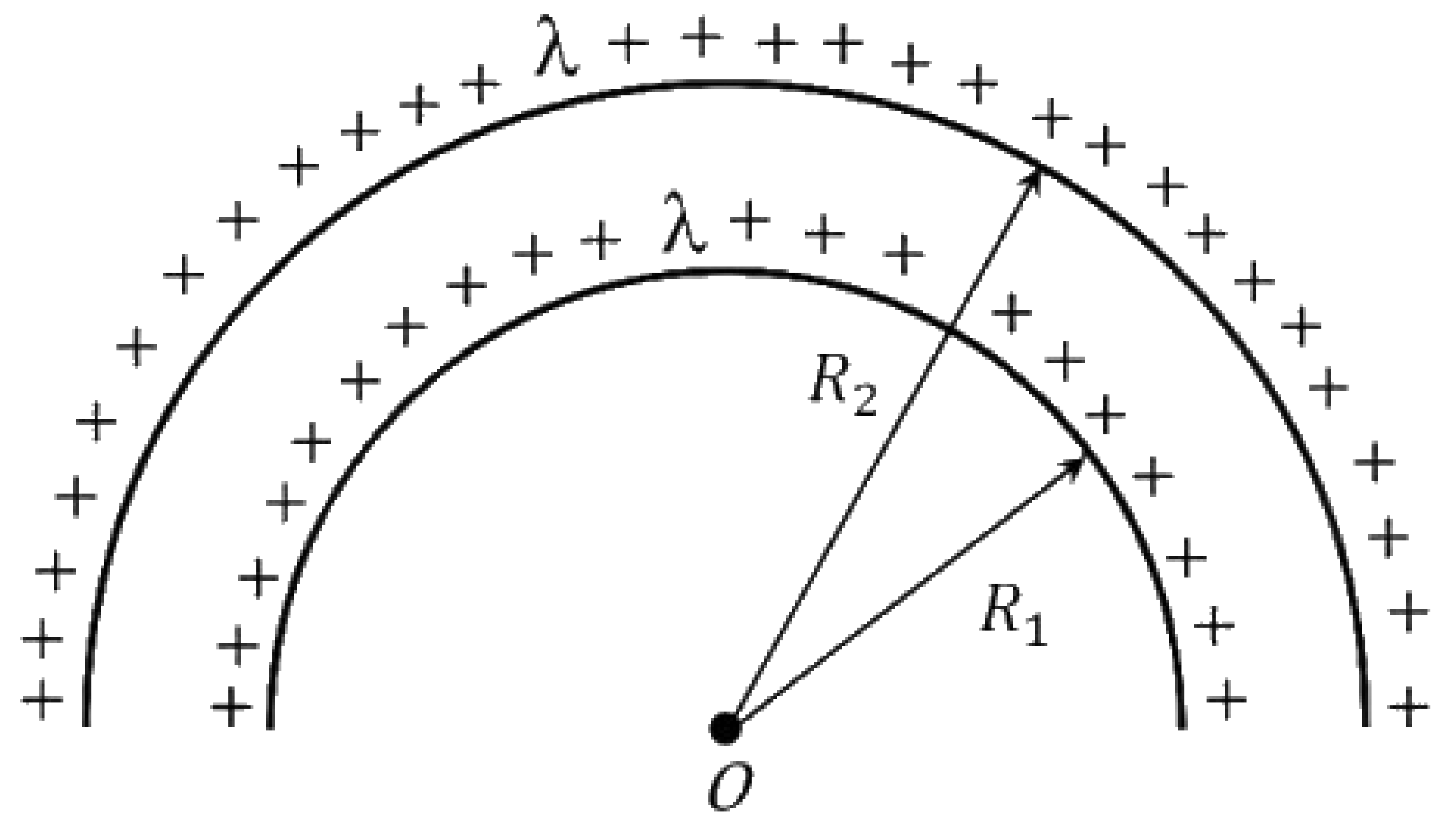
Single-correct MCQTwo concentric uniformly charged semicircular rings of radii have the same linear density , as shown. Find the potential at their common centre.Question 4
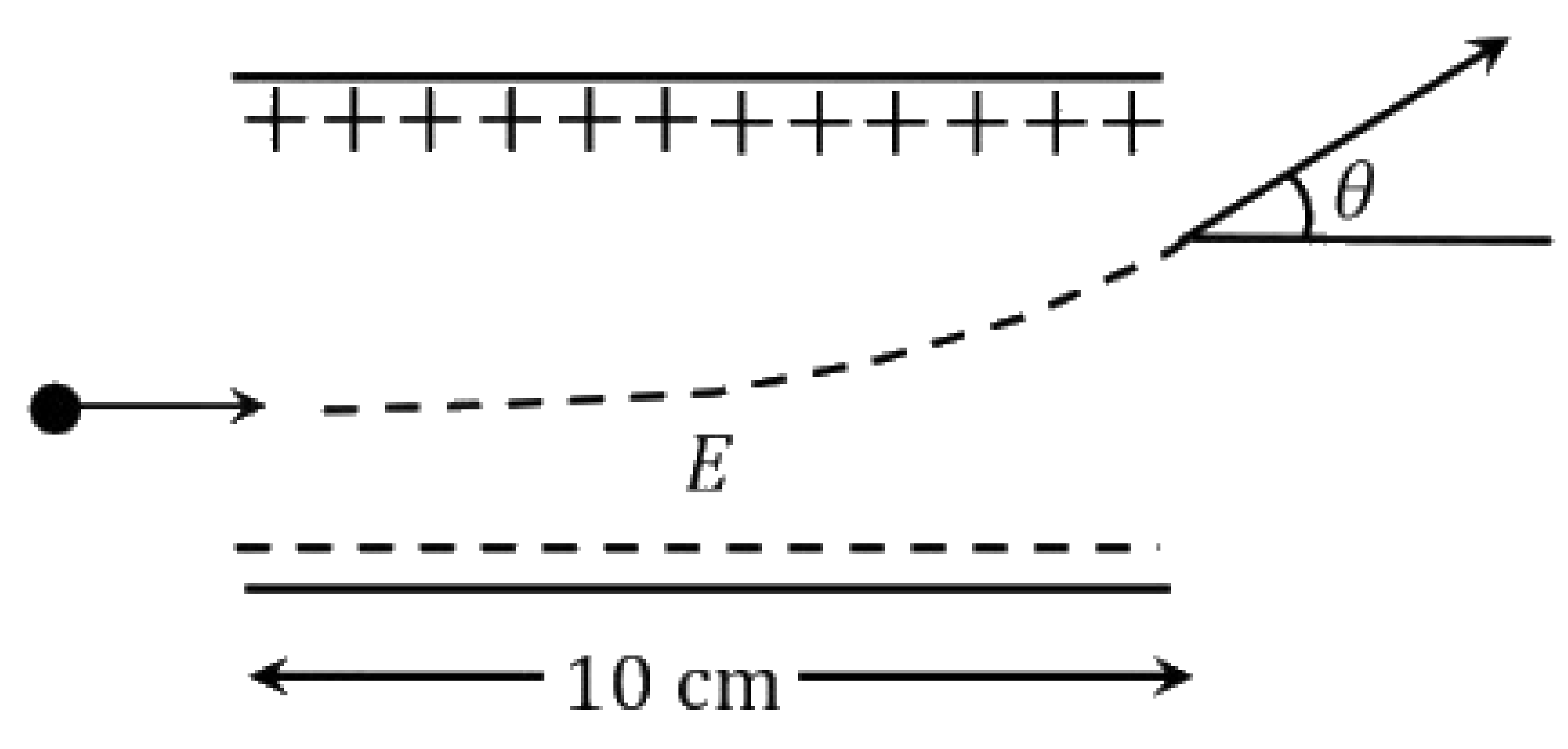
NumericalAn electron enters horizontally midway between parallel plates of length 10 cm, in a uniform field of magnitude 10 N/C, with kinetic energy 0.5 eV as shown. Find its exit deviation angle in degrees, assuming it does not strike a plate.Question 5
Single-correct MCQA charge is at the origin. Where on the x-axis should a charge be placed so the net field vanishes at x=2 cm?Question 6
NumericalA charge is at x=0 and at x=12 cm, where is the proton charge. At what x-coordinate in cm can a proton have zero net electric force?
That's the preview. Sign in once and you'll come straight back to this set, with answers and worked solutions for all 32 questions.
Sign in free to practise all 32