JEE 2022 · Electrostatics
JEEPhysicsElectrostatics2022
A read-only public preview of this previous-year question set.
5 of 25 questions
You're seeing 5 of 25 questions. Answers and worked solutions are in the free app, with every question in this set.
Question 1
Single-correct MCQA vertical field of magnitude just prevents a water droplet of mass 0.1 g from falling. Find its charge magnitude, taking .Question 2
Single-correct MCQTwo identical particles of mass 10 g and charge rest on a horizontal table in limiting equilibrium at separation L. If the friction coefficient is 0.25, find L. Take and SI.Question 3
Single-correct MCQA very long cylinder of radius R contains uniform volume charge density . An oppositely charged particle of charge magnitude q revolves in a circular orbit outside it, as indicated in the solution figure. Find the particle kinetic energy.Question 4
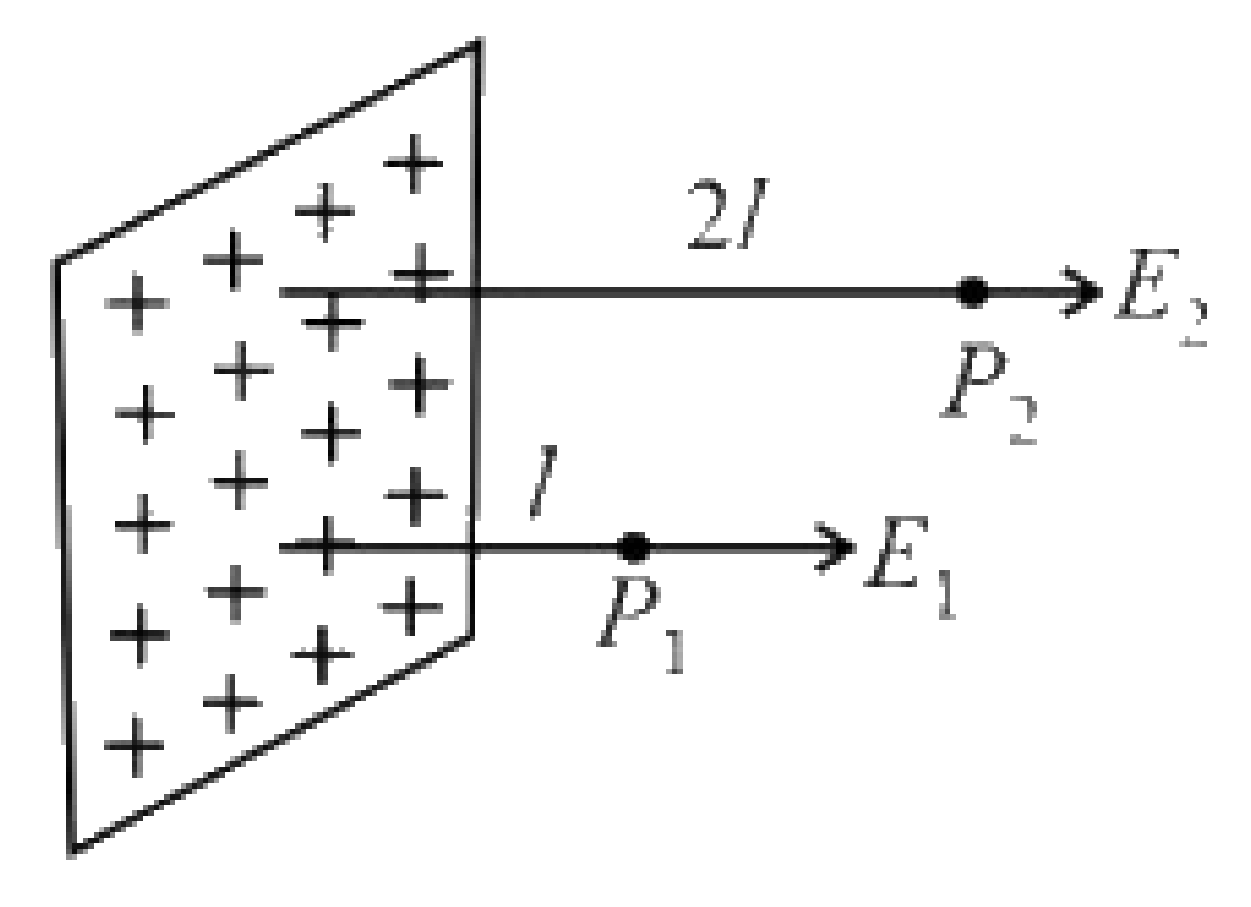
Single-correct MCQA very large nonconducting plane sheet carries uniform positive surface density . Points lie at perpendicular distances l and 2l on the same side. Find their field magnitudes .Question 5
Numerical27 identical spherical drops, each at potential 22 V, combine into one larger spherical drop. Find its potential in volts.
That's the preview. Sign in once and you'll come straight back to this set, with answers and worked solutions for all 25 questions.
Sign in free to practise all 25