Skip to content

JEE 2021 · Aldehydes and Ketones

JEEChemistryAldehydes and Ketones2021

A read-only public preview of this previous-year question set.

You're seeing 5 of 26 questions. Answers and worked solutions are in the free app, with every question in this set.

  1. Question 1

    Single-correct MCQ
    Which reagent is used for the conversion CH3CH2CH3→CH3CH2CHOCH_3CH_2CH_3\rightarrow CH_3CH_2CHO?
    1. Option A.
      Copper at high temperature and pressure
    2. Option B.
      Manganese acetate
    3. Option C.
      Molybdenum oxide
    4. Option D.
      Potassium permanganate
  2. Question 2

    Single-correct MCQ
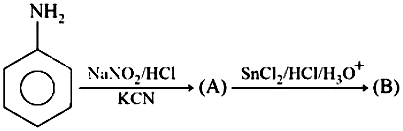
    A and B in the following reactions are:
    Diagram for sample question 2
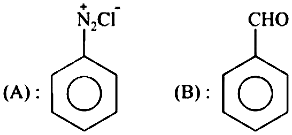
    1. Option A.
      See structure in option A.
      Option A diagram for question 2
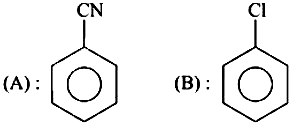
    2. Option B.
      See structure in option B.
      Option B diagram for question 2
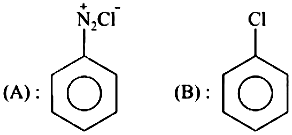
    3. Option C.
      See structure in option C.
      Option C diagram for question 2
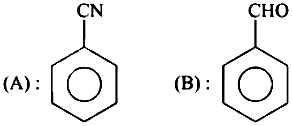
    4. Option D.
      See structure in option D.
      Option D diagram for question 2
  3. Question 3

    Single-correct MCQ
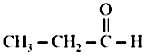
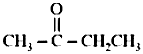
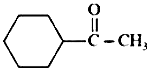
    Which displayed carbonyl compound cannot be prepared by adding water to an alkyne in the presence of HgSO4HgSO_4 and H2SO4H_2SO_4?
    1. Option A.
      See structure in option A.
      Option A diagram for question 3
    2. Option B.
      See structure in option B.
      Option B diagram for question 3
    3. Option C.
      See structure in option C.
      Option C diagram for question 3
    4. Option D.
      See structure in option D.
      Option D diagram for question 3
  4. Question 4

    Single-correct MCQ
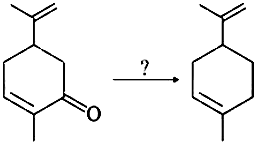
    Which reagent is suitable for the conversion shown?
    Diagram for sample question 4
    1. Option A.
      red P+Cl2\text{red P}+Cl_2
    2. Option B.
      NaBH4NaBH_4
    3. Option C.
      NH2NH2/C2H5O−Na+NH_2NH_2/C_2H_5O^-Na^+
    4. Option D.
      Ni/H2Ni/H_2
  5. Question 5

    Single-correct MCQ
    Which one of the following reactions will not form acetaldehyde?
    1. Option A.
      CH3CH2OH→CrO3/H2SO4CH_3CH_2OH\xrightarrow{CrO_3/H_2SO_4}{}
    2. Option B.
      CH2=CH2+O2→Pd(II)/Cu(II), H2OCH_2=CH_2+O_2\xrightarrow{Pd(II)/Cu(II),\,H_2O}{}
    3. Option C.
      CH3CN→(i) DIBAL-H (ii) H2OCH_3CN\xrightarrow{\text{(i) DIBAL-H (ii) }H_2O}{}
    4. Option D.
      CH3CH2OH→Cu, 573 KCH_3CH_2OH\xrightarrow{Cu,\,573\,K}{}

That's the preview. Sign in once and you'll come straight back to this set, with answers and worked solutions for all 26 questions.

Sign in free to practise all 26